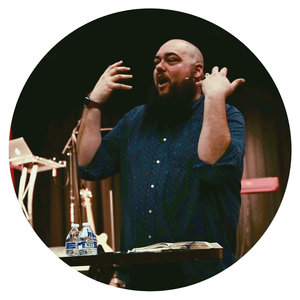

Exiled Pt 3 - Turn and Kill the Priests
This sermon was preached at Immanuel Fellowship Church in Ellisville Missouri as part of our "Exiled" series within 1 Samuel, exploring David’s time in exile before he took the throne. For more resources on faith and Christian living, visit our website or connect with our community.
You can email us at hello@ifcstl.com or call/text us at 636-431-4708
Pastor Sam Tunnell
Good morning, church! What a joy to be together today. Amen.
I’m really excited to be back with you guys. I got the amazing privilege this week of taking a few days to go lead a pastors' retreat to pour into some local pastors and ministry leaders in our area. One of my favorite things about our church family is that you empower and release me to do things like that—to go love and serve leaders whose families are sacrificing for the sake of the kingdom all around our city. What a joy to be in that, but I am glad to be back today!
Today, we are continuing our Exiled series out of 1 Samuel. We’re going to be in 1 Samuel chapter 22. Go ahead and turn there in your Bibles, or grab one of the house Bibles under the chairs.
In this series, we’re looking at a specific season in David’s life where he seemed to have a meteoric rise to fame—stepping into the king's palace, gaining popularity, serving as a warrior—and then it all falls apart. He ends up exiled, cast away, living as an outlaw on the run. He will remain an outlaw for years, going through intense trial and difficulty as all his seeming successes are stripped away.
No matter how difficult or painful things get for David, the overarching theme we see over and over again is this: God is constantly making a path for him, even in the badlands of his life.
The same is true for you, beloved. God is making a path for you. There is no space you will ever step into—no place you will go, no circumstance you will find yourself in—where God has not been there ahead of you, scouting the path and planning how He will send you through it to His good future. You never go into uncharted territory when you have Yahweh on your team.
The Reality of Suffering in a Broken World
As we jump into 1 Samuel 22, things are falling apart around David. He seems stuck with no resources, nowhere to go, and things are getting worse. He is surrounded by injustice. He has done right by his people, right by his king, and right by his God, yet he experiences injustice after injustice.
This highlights a vital truth for us today:
God leads us even in the midst of evil.
I’m not naive enough to think that isn't a tough pill to swallow—especially when you are the one in the midst of the evil. When you're hurting, a phrase like that can almost sound like a platitude. You just want relief! You want the hard thing, the fear, the broken relationship, or the addiction to just go away. You want to catch your breath.
I understand that. But unfortunately, one of the guarantees of living in a cursed and broken world is that there will always be another hardship around the corner. You will never completely escape it in this life, and it will wear you out.
The beauty of the gospel, however, is that Jesus invites those who are weary and heavy laden to come to Him. He doesn't magically make every hard circumstance disappear, but He promises to lead us through this life and ultimately buy our entrance into the true life we were made for—where the weary rest, burdens are released, tears are wiped away, and all evil is destroyed.
Until that day comes, Christ is our loving, present guide and companion in the midst of a dark and painful world.
Jesus, we need You to be our discipler today. Grab hold of us, speak into our hearts, and untangle the mess of our emotions, thoughts, and experiences to ground us in Your reality. Spirit, comfort us, challenge us, and send us out refreshed and full of You. In Your name, Jesus, Amen.
1. God Builds the Kingdom, Not Us (1 Samuel 22:1–5)
To recap briefly: David was forced to flee for his life in the middle of the night. He went from being a royal hero to having nothing but the clothes on his back. After tricking the priest at Nob to get a few loaves of bread and Goliath's old sword, he tried hiding in foreign enemy territory (Gath), but had to feign madness just to escape.
That brings us to verse 1:
So David left Gath and took refuge in the cave of Adullam. When David’s brothers and his father’s whole family heard, they went down and joined him there. In addition, every man who was desperate, in debt, or discontented rallied around him, and he became their leader. About four hundred men were with him.
From there, David went to Mizpah of Moab, where he said to the king of Moab, “Please let my father and mother stay with you until I know what God will do for me.” So he left them in the care of the king of Moab, and they stayed with him the whole time David was in the stronghold.
Then the prophet Gad came to David and said, “Don’t stay in the stronghold. Leave and return to the land of Judah.” So David left and went to the forest of Hereth.
David leaves enemy territory and hides in a cave in Adullam—a region considered "no man's land" between Israel and Philistine territory.
While hiding in this cave, people start finding him. First, his extended family arrives (who were likely facing retaliation from Saul back home). But then, a crowd of "malcontents" shows up—men who were in debt, desperate, or discontented with Saul’s rule. David suddenly finds himself leading a ragtag warband of 400 men.
Knowing that a military confrontation is coming, David takes his elderly parents to the King of Moab to secure a protection agreement for them.
(Why Moab? Politically, Moab hated Saul, so helping a rival warlord made sense to them. Familially, David’s great-grandmother was Ruth the Moabitess, meaning he had ancestral ties there.)
Notice what David is doing here: He is securing treaties, protecting his people, and leading an army. He is acting like the true king of Israel, even though he doesn't have the crown yet.
In the ancient Near East, kingship was taken by force. The meanest, strongest guy killed his rivals and grabbed the throne. Everyone assumed David was building an army to overthrow Saul and take what was "his."
But the text shows us something radically different: David is not trying to seize the throne.
He knows God anointed him, but he refuses to force his way into power. He chooses daily integrity, honoring Saul as king, and letting God build his future. David didn't go out recruiting an army; God sent the men to him. David didn't scheme for power; God sent the prophet Gad to guide him.
God was building David's kingdom, not David.
Some of us desperately need that reminder today. You can worry about today's faithfulness, and let God worry about your five-year plan. Planning is wise, but your primary drive must be today's integrity. Trust God with your future, honor Him today, and let Him move you toward the future He has planned.
2. The Rotten Fruit of Envy (1 Samuel 22:6–10)
The scene shifts from David’s camp back to Saul’s court:
Saul heard that David and his men had been discovered. At that time Saul was in Gibeah, sitting under the tamarisk tree at the high place. His spear was in his hand, and all his servants were standing around him. Saul said to his servants, “Listen, men of Benjamin! Is Jesse’s son going to give all of you fields and vineyards? Do you think he’ll make you all commanders of thousands and commanders of hundreds? That’s why all of you have conspired against me!...”
Then Doeg the Edomite, who was in charge of Saul’s servants, answered, “I saw Jesse’s son come to Ahimelech son of Ahitub at Nob. Ahimelech inquired of the Lord for him and gave him provisions. He also gave him the sword of Goliath the Philistine.”
Saul is sitting under a tree holding his spear (holding official court), throwing a paranoid temper tantrum. He berates his officers, accusing them of treason and complaining that nobody cares about him.
Then Doeg the Edomite—a ruthless opportunist—sees a chance to advance himself. He tattles on the priests at Nob, exaggerating the interaction to make it look like Ahimelech and David plotted a coup against Saul.
Saul’s spiritual and emotional decline is complete. He is consumed by a root of envy. He sees God's favor on David, knows he has lost it himself, and is desperate to cling to power.
Saul’s life is a cautionary tale for us: Envy rots you out.
Envy is a cancer that stews within you and leaves you a hollow shell. It is a coiled viper in your hand, ready to strike. It doesn't matter if you are envious of worldly things (houses, money, status) or spiritual things (someone else's ministry or gifts)—envy will destroy you.
How do you kill envy?
Only contentment in the goodness of Christ will kill your envy.
Getting the thing you are envious of won't satisfy you; your envy will just shift to something else. True freedom comes when you bring your envy into the light, confess it to your brothers and sisters, and rest in the sufficiency of Jesus.
3. The Darkness of Antichrist Power (1 Samuel 22:11–23)
Saul summons the priest Ahimelech and his entire family:
Saul asked him, “Why did you and Jesse’s son conspire against me?...”
Ahimelech replied to the king, “Who among all your servants is as faithful as David? He is the king’s son-in-law, captain of your bodyguard, and honored in your house! Was today the first time I inquired of God for him? Of course not!... For your servant didn’t know anything about all this.”
But the king said, “You will surely die, Ahimelech, you and your father’s whole family!”
Ahimelech speaks with total, naive innocence. He had no idea David was fleeing from Saul! But Saul is too far gone in his paranoia to care about the truth.
Saul orders his royal guards to execute the priests of the Lord. But his guards refuse—they know killing Yahweh’s priests is a line no Israelite should cross.
So Saul turns to Doeg the Edomite: "You execute them."
Doeg has no qualms. He slaughters 85 priests wearing linen ephods in cold blood. Then, he marches to the priestly city of Nob and completely wipes it out—men, women, infants, and livestock.
This is a chilling, tragic scene. Chapters earlier, when God explicitly commanded Saul to execute judgment on an evil enemy nation (the Amalekites), Saul disobeyed. But here, consumed by envy, he brutally massacres the innocent priests of God.
In this moment, Saul acts with an antichrist spirit—a heart totally given over to opposition against God, furthering chaos, death, and the curse.
The Hope in the Darkness
Here is the ultimate truth about any "antichrist" power in this world: No matter how much destruction they cause, they cannot win.
Evil powers may look strong. They may unleash horror, rule empires, and seem to hold all the cards. But they are defined by their inevitable defeat. Pharaoh, Saul, Herod, Nero—none of them could wipe out the kingdom of God.
Even in this dark massacre at Nob, God preserved a remnant: Abiathar, one of Ahimelech's sons, escaped the slaughter and fled straight to David.
Abiathar told David that Saul had killed the priests of the Lord... David said to Abiathar, “...I myself am responsible for the lives of everyone in your father’s family. Stay with me; don’t be afraid. The one who wants to take my life wants to take your life. You will be safe with me.”
Even out of an avalanche of evil, God pulls a pebble of hope. Abiathar brings the priestly ministry directly to David, linking the future king with Yahweh's priesthood.
This is the central promise of the gospel: When evil seems to be at its strongest, God is executing His ultimate victory.
Look at the cross. When Jesus was betrayed, beaten, and publicly crucified, it looked like darkness had won. But Christ's death on the cross was the precise moment Satan, sin, and death were defeated forever.
Walking Through the Valley
Knowing that God wins the final victory is a wonderful truth, but how does that help you face your suffering today? How does it help when you face real-world tragedy, injustice, and pain?
In Psalm 23, David reflects on this exact reality. He combines the image of a shepherd guiding sheep with a king hosting a feast. Right at the center of the psalm, he writes:
"Even though I walk through the valley of the shadow of death, I will fear no evil, for You are with me; Your rod and Your staff, they comfort me. You prepare a table before me in the presence of my enemies."
Notice what David doesn't say. He doesn't say that following God means skipping the dark valley or avoiding enemies. Faith doesn't guarantee an easy life where bad things never happen.
Instead, the promise of God is this: He will be WITH YOU in the valley.
He doesn't shout encouragement at us from a distant throne. Jesus climbed down into the muck, the mire, and the sorrow of our world. He walks beside us and goes ahead of us to clear the path.
Letting Go and Taking His Hand
When we face the evil and pain of this world, our natural instinct is to try to control, escape, or numb it. We turn to scrolling, addiction, workaholism, anger, or control—anything to avoid feeling the pain.
None of those things will save you. You cannot scroll, spend, or work your way out of the brokenness of this life.
Instead, you have to let go of your self-reliance and take the Father's hand.
Think of a toddler who gets spooked by a loud noise—they instantly run back and grab their parent's hand. They don't need to understand everything happening around them; they just need to feel their parent holding them tight.
Beloved, that is what your Heavenly Father offers you today:
You don't have to carry the weight of this world on your shoulders.
You don't have to numb yourself to survive.
You just need to take His hand and let Him lead you through the valley.
He is taking you somewhere good. He brings hope out of despair, redemption out of trauma, and joy out of sorrow.
Take a moment right now to consider your own life: Where are you trying to force your own path? What would it take for you today to let go, take the Father's hand, and trust Him to lead you through?
Reflection & Response
If you are struggling: Bring your pain, fear, and weariness to Jesus. Stop trying to control the outcome and ask Him to guide your steps today.
If you are battling envy: Confess it to the Lord. Ask Him to replace your comparison with deep contentment in the finished work of Christ.
If you are in Christ: Come to the Communion table today. As you take the bread and the cup, remember that Christ stepped into the dark mess of this world and gave His body and blood to secure your eternal victory.
This sermon was preached at Immanuel Fellowship Church in Ellisville Missouri as part of our "Exiled" series within 1 Samuel, exploring David’s time in exile before he took the throne. For more resources on faith and Christian living, visit our website or connect with our community.
You can email us at hello@ifcstl.com or call/text us at 636-431-4708